
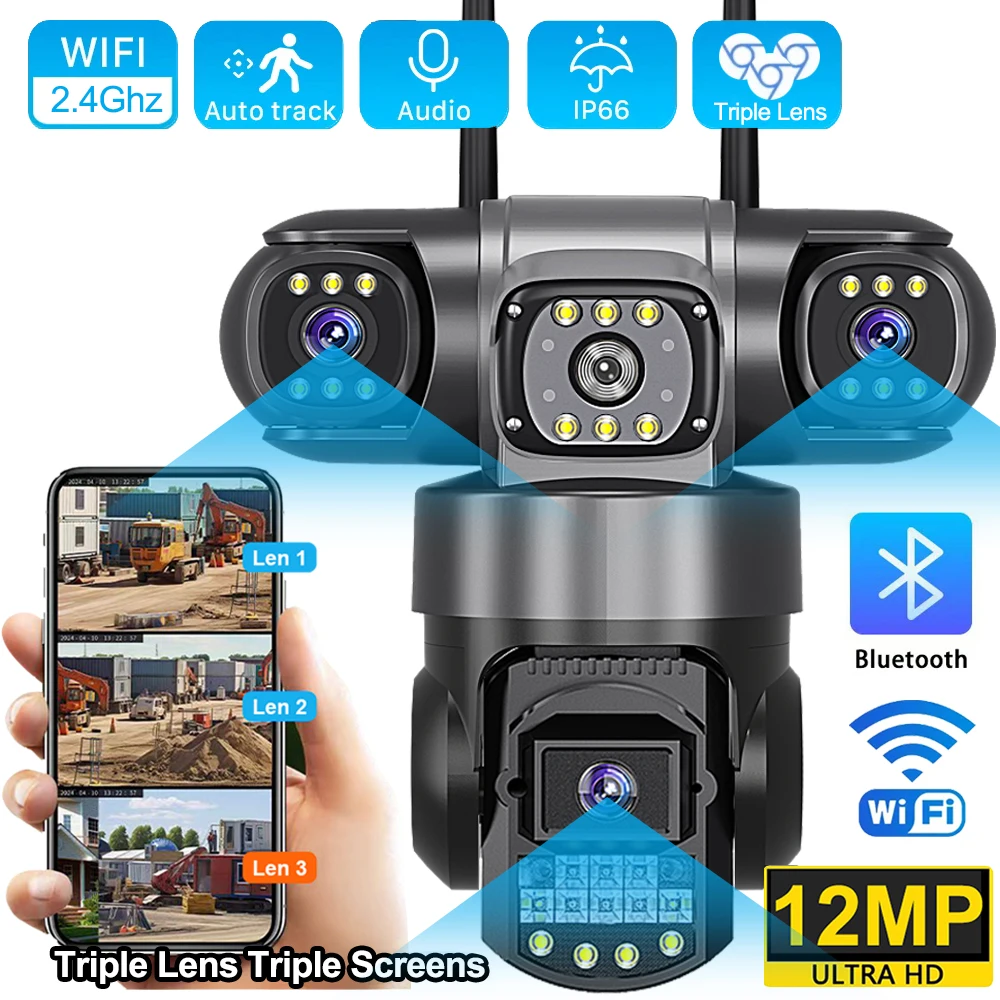
Security Camera Pole Mount: How to Choose, Install, and Secure Outdoor Camera Mounts


Security Camera Pole Mount: How to Choose, Install, and Secure Outdoor Camera Mounts
You’ve found the perfect spot for your new security camera—it covers the whole driveway! The only problem is the ideal location is a lamp post you can’t drill into. How do you attach your camera without causing damage?
The solution is a security camera pole mount. These clever outdoor camera mounts work like a heavy-duty belt, using strong steel straps to securely hug any pole, post, or even a tree. This guide will show you how to choose the right one, install it in minutes, and get that perfect angle without ever touching a drill.
What Exactly is a Pole Mount? The Simple Adapter for a Perfect View
A security camera pole mount is a sturdy adapter that acts as a bridge between your camera and a pole. Since you can’t attach a camera directly to a round or uneven surface, this bracket gives you a flat, stable plate to work with. It’s the go-to solution for getting your camera exactly where you need it, especially when the best spot is far from the side of your house.
This small piece of hardware unlocks a better vantage point. A universal pole mounting bracket for cameras provides a secure connection point—often a standard 1/4-20 screw mount—that works with most popular models like Ring, Arlo, or Wyze. With your camera held firmly in place, you can finally get that bird’s-eye view.
Straps vs. Screws: Choosing the Right Mount Type
Picking the right pole mount comes down to one question: can you drill into your pole? If the answer is no—as with a metal light post—you’ll want a Strap Mount. These kits allow secure mounting camera without drilling into pole, using strong bands that wrap tightly around the surface.
Strap mounts are popular because they’re so versatile. Using tough stainless steel straps for camera mounting, this type of heavy duty outdoor camera pole clamp can hug nearly any round or square post without leaving a mark. This makes them perfect for renters or anyone who wants a strong, weather-resistant hold on a surface they can’t damage.
Alternatively, for a wooden post or tree, a Direct-Bolt Mount offers a rock-solid connection. You just screw the mount’s base directly into the wood. While this requires a drill, the resulting grip is incredibly stable. The choice is straightforward: straps for no-drill surfaces and screws for wood.
Will It Fit? How to Match a Mount to Your Camera and Pole
Will your chosen mount connect to your specific camera? Most popular cameras—from brands like Ring, Arlo, and Wyze—use a standard screw hole on the bottom. In the mount’s product description, look for the phrase “fits a 1/4-20 screw mount.” If you see that, you’re good to go.
Next, make sure the mount will hug your pole correctly. While most kits are a universal pole mounting bracket for cameras, the straps have a length limit. To find your pole’s size, simply wrap a string or measuring tape around its widest part to get the circumference. This tells you the minimum strap length you need. Also, note if your pole is round, square, or oddly shaped; nearly every adjustable camera pole bracket fits common shapes, but it’s always smart to confirm.
Before you buy, run through this simple compatibility checklist:
- Camera: Does the mount list “1/4-20 screw” support?
- Pole Size: Are the mount’s straps longer than your pole’s circumference?
- Pole Shape: Does the bracket work with round and/or square poles?
How to Install a No-Drill Pole Mount in Under 15 Minutes
Installing a strap kit is often a quick 15-minute job. The kit works just like a heavy-duty belt: you’ll thread two stainless steel straps through the slots on the back of the mounting bracket before you head outside.

Once at the pole, wrap the straps around it and feed the loose end into the tightening mechanism. Using a common flathead or Phillips screwdriver, turn the small screw on the mechanism. As you turn, the strap will get tighter, cinching the mount firmly in place. Keep going until the bracket is completely solid and won’t budge.

With the bracket secure, all that’s left is to screw your camera onto the mount. Your camera is now mounted securely, giving you that perfect vantage point. The final piece is ensuring it has power and a Wi-Fi signal.
Power and Wi-Fi: Don’t Forget the Connection
Your camera is mounted high on its new weatherproof pole bracket for surveillance, but it’s useless without a good connection. Before securing everything, take your phone to the pole and check your Wi-Fi signal. If you have two or more bars, you’re likely in good shape. If the signal is weak, you may need a Wi-Fi extender to bridge the gap.
For power, a solar powered security camera setup is the cleanest solution. Many battery cameras have an optional solar panel accessory that connects directly to the camera, using sunlight to trickle-charge the battery. This eliminates the need to run power cables to the pole.
If you prefer a wired connection for maximum reliability, look into Power over Ethernet (PoE). This technology sends both power and data through a single network cable, cutting your wiring job in half. For a professional finish, you can tuck the connection point inside a small pole mounting box for camera wiring to keep it safe from the elements.
Your Action Plan for a Perfect Pole-Mounted Camera View
Keep Out! DIY Security Camera Tower for my Farm
Your security options are no longer limited by where you can drill a hole. Where you once saw an obstacle—a lone post or tree—you now see the ideal spot for your camera. By choosing the right mount and confirming it fits your camera, you can turn any pole into a powerful observation point. That former blind spot in your yard is now covered, giving you peace of mind and the best possible view of what matters most.


You May Also Like

Home alarm systems and smart home security devices compared

How to Choose a Solar-Powered Cellular Security Camera (No Wi‑Fi Needed)
