
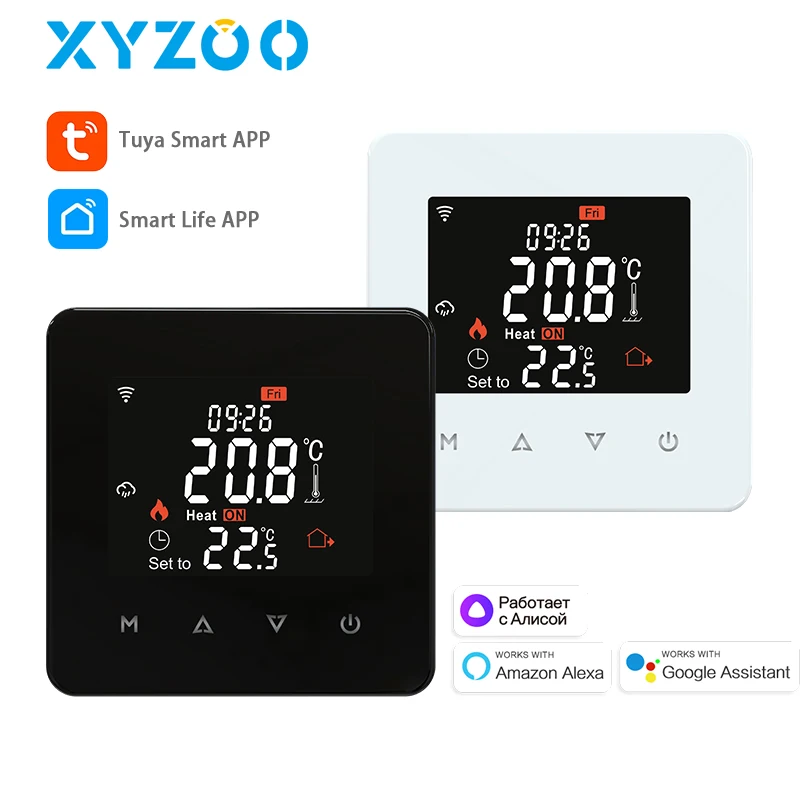
Best Thermostats for Electric Heat: Smart Options for Baseboard Heaters


Best Thermostats for Electric Heat: Smart Options for Baseboard Heaters
Tired of your electric heaters being either ‘full-blast hot’ or ‘ice-cold off’? If your home experiences those jarring temperature swings, the problem likely isn’t your heater. The culprit is almost always the small control box on the wall, and upgrading it can finally deliver the steady, comfortable warmth you’ve been missing.
Summary
Electric baseboard and wall heaters require line-voltage (120/240V) thermostats—not common low-voltage models—and using the wrong type is unsafe. Confirm a line-voltage setup by the bulky, vented thermostat body and two or four thick wires, and choose a double-pole unit for a true OFF and safer maintenance. Popular low-voltage smart thermostats like Nest or Ecobee can’t directly control 240V heat; instead, use purpose-built smart line-voltage options (e.g., Mysa, Sinopé), with relay adapters only for licensed pros. Action plan: identify your system, select a compatible double-pole thermostat, and install with the breaker off or by a professional.
Before buying a new thermostat, you must understand a critical distinction. The vast majority of thermostats on the market, including many popular smart models, are “low voltage.” They are designed for central furnaces and air conditioners. Your electric baseboard or wall heaters, on the other hand, operate on high voltage systems and require a completely different device known as a line voltage thermostat.

Think of it as the difference between a garden hose and a fire hose. A low voltage thermostat is like a garden hose nozzle; it only controls a tiny signal sent to a separate system. A line voltage model is the heavy-duty valve on the fire hose. It’s built to directly handle the full, powerful flow of electricity your heater needs to make heat.
Using the wrong type isn’t just a mistake—it’s dangerous. Connecting a delicate low voltage unit to a powerful heater circuit will quickly burn it out and can pose a serious fire risk. To stay safe and get the performance you want, you must choose a thermostat explicitly labeled for “Line Voltage,” “Electric Heat,” or as a “120V/240V thermostat.”
Is Your Thermostat Line Voltage? 3 Quick Visual Checks
How can you tell what’s already on your wall? Fortunately, you can often identify a line voltage thermostat without any tools. The physical clues are usually right in front of you, and knowing them is the first step in correctly replacing an old baseboard heater thermostat.
Start by looking at the thermostat’s body. Is it a bit bulky, perhaps with a large dial and noticeable vents on the top or bottom? That’s a classic sign. Because the full power of the heater runs directly through it, a line voltage thermostat generates a little heat of its own and needs those vents to stay cool—much like a dimmer switch for a bright light.
For the most definitive clue, you’ll need to look at the wiring (after turning off the power at your circuit breaker, of course). Understanding your electric heat thermostat wiring is simple. A line voltage unit will have two or four thick wires coming out of the wall, similar to the cord on a small appliance. This is very different from the thin, multi-colored bundle of wires used for low-voltage systems.
Checklist: Do you have a line voltage thermostat?
- Does it control electric baseboard, wall, or radiant heaters?
- Is the thermostat casing bulky, often with vents on the top and bottom?
- Are there two or four thick (like appliance cords) wires connected to it?
If you answered “yes” to these questions, you have a line voltage system. The next key feature to consider is the difference between “single-pole” and “double-pole” models.
Line Voltage (Left) vs. Low Voltage (Right). Note the difference in size and the presence of air vents.
What “Double Pole” Means and Why It’s the Safer Choice
As you shop for a line voltage thermostat, you’ll see two key terms: “single-pole” and “double-pole.” A single-pole thermostat is the most basic type. Think of it like a dimmer switch; even when turned all the way down, there’s still live power flowing to the heater. It doesn’t have a true “off” position, which can be a safety concern if you’re doing maintenance or want the heater completely disabled during the summer.
In contrast, a double-pole thermostat provides a true “OFF” setting. Imagine it like a master switch that cuts the power completely. It disconnects both hot wires running to the heater, ensuring no electricity can pass through. When you’re considering a 240V thermostat replacement, this complete shutdown is an essential safety feature, giving you total peace of mind that the unit is de-energized.
For the minor price difference, a double-pole model is always the superior and safer choice. It guarantees that when you set the thermostat to OFF, it is truly, completely off.
Can You Use a Nest or Ecobee with Electric Heat? The Real Answer
It’s the number one question for homeowners with electric heat: can you use a Nest or Ecobee with 240v heat? The direct answer is no. Popular smart thermostats like Nest and Ecobee are low-voltage devices designed to send a small signal to a furnace or central air system. They simply cannot handle the high power that runs directly through a line-voltage thermostat and would burn out, creating a serious safety risk.
Fortunately, you don’t have to give up on smart features. The simplest and safest solution is to choose a wifi thermostat designed for high-voltage systems. Companies like Mysa and Sinopé offer smart thermostats for electric baseboard heaters because they are built specifically for this purpose. These devices give you the scheduling, remote control, and energy tracking you want, all while being fully compatible with your system’s power needs.
You may see information online about using an adapter or relay to make a low-voltage thermostat work. This component acts as a “translator” between the Nest’s low-power signal and the heater’s high-power demand. While technically possible, this is a complex and potentially dangerous installation that requires intricate wiring and is a job strictly for a licensed electrician—it is not a DIY project.
For nearly everyone, the clear choice is to bypass the complexity and stick with a device designed for the job. A dedicated line-voltage smart thermostat provides all the benefits without the risks or expensive custom wiring.
Smart thermostats like Mysa are designed specifically for line-voltage electric heat.
Your Action Plan for a Smarter, More Comfortable Home
You now understand the critical component controlling your home’s comfort and can confidently identify what your electric heat system requires.
Your 3-Step Action Plan:
- Identify Your System: Use our visual checks to confirm you have line voltage heat.
- Choose Your Thermostat: Select a line-voltage model (programmable or smart) that is double-pole for safety.
- Install Safely: Always turn off the breaker, and if you have any doubt, call a professional electrician.
You’re now equipped to unlock consistent warmth and better energy efficiency. That old, inaccurate thermostat no longer controls your comfort—you do.

You May Also Like

Google Audio Bluetooth Speaker Review: Powerful Sound and Smart Connectivity in Chalk

Role of AI in Smart Devices – Transforming Home Life
