
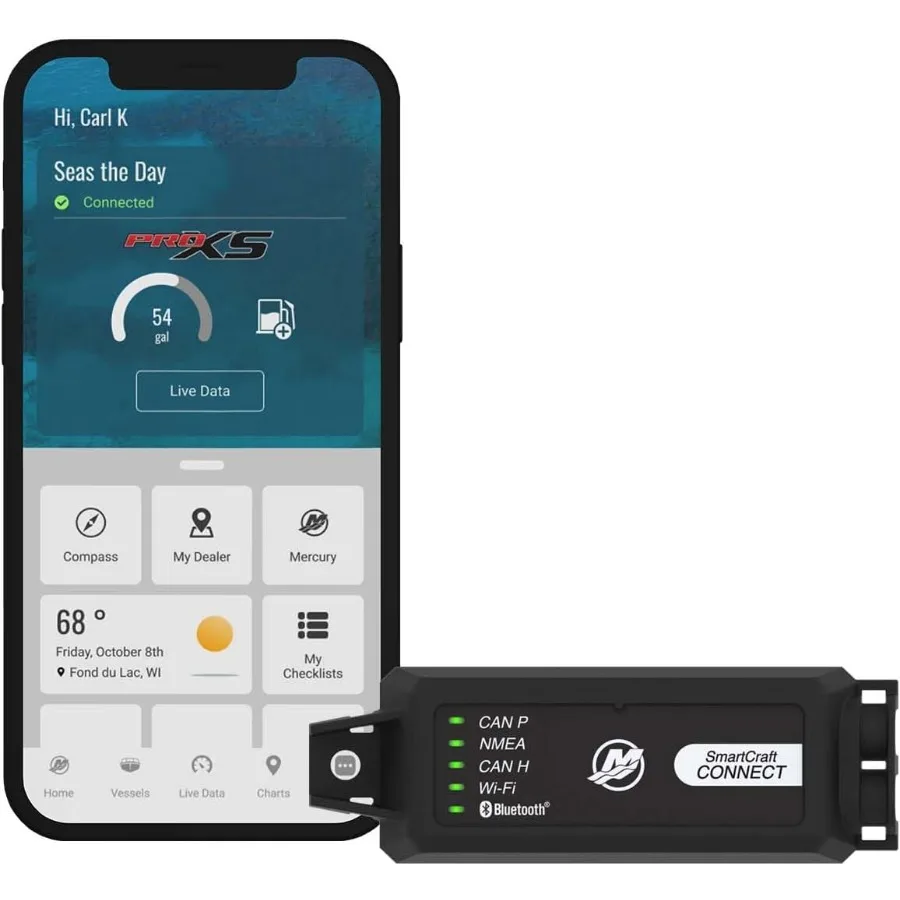
Enhancing Safety with Boat Engine Monitoring Systems

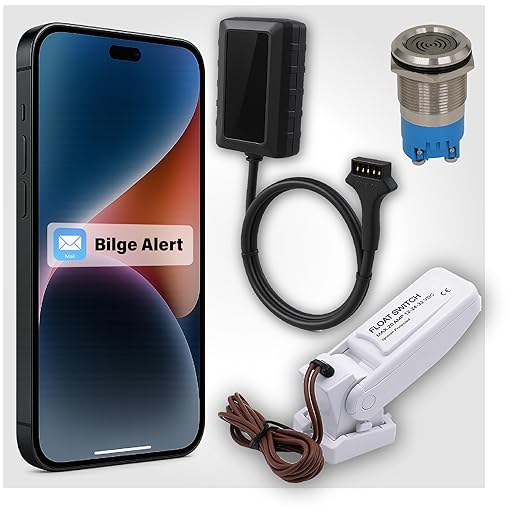


Enhancing Safety with Boat Engine Monitoring Systems
You’re five miles from shore on a perfect day, and the engine suddenly sputters. Your heart sinks. Your dashboard gauges all looked fine a minute ago. This scenario is a boater’s nightmare, but it raises a critical question: What if your gauges aren’t telling you the whole story?
The truth is, most traditional analog gauges provide a dangerous false sense of security. Think about it: your car’s dashboard gives you precise, real-time numbers for everything. Why does the gauge on your boat often feel like a vague suggestion, with a needle simply floating somewhere in a wide “normal” zone?
This difference is where disaster often hides. An analog temperature gauge, for instance, might show the needle in the “OK” range for any temperature between 160°F and 195°F. This completely masks a slow, dangerous creep upwards—the earliest sign of a problem. A digital system reveals the true story, showing the numbers climbing from 182°, to 186°, to 190°, giving you a 20-minute head start before the alarm ever sounds.

This shift from analog guesswork to digital certainty is the key to preventing a boat engine failure with alerts. Understanding how to read modern boat engine gauges means you’re no longer just reacting to catastrophes; you’re seeing them coming. You are finally accessing the crucial information your engine has been trying to tell you all along.
The ‘Big Four’ Vitals: What Your Engine Is Trying to Tell You
Think of your car’s simple dashboard. A modern marine engine monitor goes much further, acting as a live health report for your boat. While it can show a lot, what a marine engine monitor shows first and foremost are four vital signs: engine temperature, oil pressure, battery voltage, and fuel. Understanding what your engine is trying to tell you through these numbers is the key to worry-free boating.
Your engine’s temperature and oil pressure are its core wellness indicators. Instead of just a single “hot” alarm, a digital monitor shows you a slow temperature creep—an early sign that your cooling water intake might be clogged with weeds. Similarly, a steady oil pressure reading is like a healthy heartbeat for the engine, and any drop is a clear warning for preventing boat engine failure before it happens.
Battery voltage might seem minor, but it’s your ticket home. A traditional gauge doesn’t tell you if the battery is actually charging properly after a long winter or a day at anchor with the stereo on. A smart monitor confirms your electrical system is healthy, so you’ll never face that awful silence when you turn the key to head back to the dock.
Finally, you can forget guessing based on a sloshing, inaccurate fuel gauge. A modern system can use a fuel flow sensor, acting as a precise marine engine diagnostics tool for your range. You’ll see your exact fuel burn in real-time and know with certainty if you have enough gas to get to that distant fishing spot and back.
These four pillars of information transform abstract engine data into simple, actionable peace of mind. But beyond just preventing problems, this data can also make your boating more efficient. By seeing exactly how your boat uses fuel at different speeds, you can learn how to find its ‘sweet spot’ and save a surprising amount on gas.
How to Find Your Boat’s ‘Sweet Spot’ and Save on Fuel
Beyond just preventing problems, the data from a modern monitor can turn you into a much smarter captain. It does this by showing you a number your old gauges never could: your engine’s real-time fuel flow, measured in Gallons Per Hour (GPH). Think of it as a live ticker telling you exactly how thirsty your engine is at any given moment.
But knowing how fast you’re burning fuel is only half the story. The real magic happens when your monitor combines that GPH data with your boat’s speed from its GPS. It then calculates your actual fuel economy in Miles Per Gallon (MPG), just like the trip computer in your car. This is one of the most powerful marine telematics solutions benefits: turning complex data into a simple, incredibly useful number.
With this MPG reading, finding your boat’s most efficient cruising speed—its “sweet spot”—is easy. On a calm day, get the boat on plane and make a note of your MPG. Then, experiment by nudging the throttle up or down in small steps. You’ll quickly discover the exact RPM where your boat travels the farthest for every gallon burned, something a simple real-time fuel consumption tracker for boats makes effortless.
Once you know that number, you are in complete control of your range and budget. That far-off island or distant fishing spot is no longer a fuel-anxiety guessing game. This ability for your electronics to share information and create new insights is what makes the best marine digital gauge system so valuable, acting like a central brain for your vessel.
The ‘Nervous System’: How Your Boat’s Electronics Talk to Each Other
You just saw how combining fuel data with GPS speed gives you a powerful miles-per-gallon number. But how does a GPS unit on your arch actually “talk” to a fuel sensor on your engine? The answer lies in your boat’s own version of a computer network, its central nervous system.
Think of it like a USB system for your boat, where a single cable runs through the vessel and all your electronics simply plug into it. This plug-and-play standard is called NMEA 2000, and it’s the magic that allows all your devices to speak the same language. Once connected, a huge range of NMEA 2000 engine data parameters—from RPM to temperature and oil pressure—can be shared with any compatible screen on board.
The real-world benefit of this is incredible convenience. Instead of a dashboard cluttered with a dozen separate gauges, you can get your critical boat engine data on chartplotter you already use for navigation. Imagine seeing your engine temperature and remaining fuel range displayed right next to your map as you head back to the dock. It’s one screen, one glance, and total peace of mind.
But what if your engine is a bit older and doesn’t have that modern plug? You’re likely not out of luck. For many popular engines, a simple adapter box (often called a J1939 to NMEA 2000 gateway) acts as a translator. This device converts your engine’s data into the NMEA 2000 format, allowing even classic workhorse motors to join the network and display their health on your modern screens.

Is Installing a Monitoring System a DIY Job? A Reality Check
So, can you install one of these systems yourself? For many boaters, the answer is a surprising “yes.” The difficulty of how to install a vessel monitoring system really just hinges on your engine’s age and existing technology, falling somewhere between plugging in a new device and a more hands-on weekend project.
If your boat has a newer engine, you’re likely in for a simple job. These motors often have a spare NMEA 2000 port. Installation just means adding a T-connector to your boat’s network backbone—like plugging a power strip into an outlet—and connecting your monitor. The whole task is often done in under 30 minutes.
For older engines with traditional needle gauges, you’re not left out. This is where an analog-to-digital converter box acts as a translator. This small device connects to your existing engine sensors, converting their old-school signals into the modern NMEA 2000 language. This analog to digital boat gauge conversion requires some basic wiring but is a very common and manageable upgrade.
An even simpler path is a wireless boat sensor network, using stick-on sensors that broadcast data to a hub, eliminating new cables entirely. Your project will likely fall into one of these categories:
- Modern Engine (with NMEA 2000 port): Easy DIY, often under 30 minutes.
- Older Engine (analog gauges): Moderate DIY, requires an adapter box and wiring.
- Wireless System: Easiest DIY, involves attaching sensors and connecting a hub.
Once connected, this data can do more than just appear on your screen at the helm—it can even reach you when you’re miles away from your boat.
Peace of Mind from Afar: Checking Your Boat’s Health on Your Phone
That feeling of worry when you’re away from the marina is something every boat owner knows. Is the battery holding its charge after last weekend? Did that heavy rain get into the bilge? Modern monitoring extends beyond the helm, sending this crucial information directly to a remote boat system monitoring app on your phone. This leap in technology is possible thanks to telematics.
Think of marine telematics solutions benefits as giving your boat its own small, dedicated cell phone. A small hub on your vessel uses a cellular connection to report back to you, anywhere you are. This allows you to check critical systems with a simple tap. You can see your exact battery voltage, ensuring you’ll have power when you arrive, and confirm your bilge is dry, giving you confidence that your boat is safe and sound.
One of the most powerful features is called geofencing. This system lets you draw an invisible, digital fence around your boat’s slip or mooring. If your boat ever moves outside of that designated area—whether from a broken line or an unauthorized tow—you receive an instant alert on your phone. It’s like a security system that protects your boat’s location 24/7.
It’s helpful to understand the vessel management system vs monitoring system distinction. A monitor at your helm is your co-pilot, helping you run the boat safely. A remote telematics system is your full-time watchman, guarding the boat when you’re not there. Together, they provide complete peace of mind, both on the water and from home.

From Guesswork to Confidence: A New Standard of Boating
You no longer have to look at your boat’s engine as a mysterious source of anxiety. You now understand that it’s constantly generating vital signs, and with the right tools, you can interpret them. This knowledge transforms you from a passenger hoping for the best into a captain who is truly in command, enhancing safety and control on the water. You’ve traded guesswork for certainty.

Ultimately, a modern monitoring system isn’t about overwhelming you with data. It’s a powerful marine engine diagnostics tool for owners that filters out the noise to deliver one core benefit: confidence. The journey to finding the best marine digital gauge system doesn’t start in a store; it starts with the engine you already own, turning complex information into simple peace of mind.
Your path to worry-free boating begins with a single question: Can my engine speak the language? To find out, locate your engine’s model and year. Then, perform a quick web search for “[Your Engine Model and Year] NMEA 2000.” The results will instantly tell you if your boat is ready for a simple plug-and-play system, putting you one step closer to a smarter, safer, and more enjoyable time on the water.
Remote boat engine monitoring by Sentinel
Marine Engine Monitoring System Market Size, Forecasts 2034 Global Market Insights Inc....
India To Launch World’s First Indigenous Marine Engine Monitoring Technology Marine Insight...
Ilmor to Display Touchscreen Merlin Dash System at Miami Show Speed on the Water...
5 Great Remote Boat Monitoring and Control Systems Boating Mag...


You May Also Like
