
System automation for yachts


System Automation for Yachts
Imagine tapping a single button on a screen as the sun begins to set. Instantly, the deck lights fade up to a warm glow, your favorite playlist streams through the speakers, and the anchor is monitored for any drag. This isn’t a scene from a futuristic movie; it’s the reality of today’s smart yacht, powered by integrated yacht automation systems and thoughtful automation solutions. Far from being complicated, this technology is designed to do one thing above all else: make your time on the water more relaxing and intuitive.
Of course, boating isn’t always about serene sunsets. Every boat owner knows the feeling of a crowded marina, a stiff crosswind, and the stressful dance of docking. This is where the true power of system automation for yachts becomes clear. Instead of juggling throttles, a wheel, and shouted instructions, modern marine systems give you a single, calm command center. One screen can show a 360-degree “bird’s-eye view” of your boat, putting thruster controls right at your fingertips and turning moments of high anxiety into moments of cool confidence.
You might think adding “smart” technology introduces another layer of complexity. The reality is precisely the opposite. The core goal of a fully integrated yacht is to replace a confusing wall of 30 different switches with one simple, interactive display. Think of it as the boat’s central nervous system—a single brain that allows the engines, navigation, lights, and entertainment to work together seamlessly. This shift from manual chaos to one-touch control is the single biggest benefit of modern marine tech.

These systems deliver tangible benefits by simplifying operations to make boating easier, enhancing safety for total peace of mind, and unlocking a new level of enjoyment on the water.

What Exactly Makes a Yacht “Smart”?
When we hear “smart,” we often think of smart home devices—a lightbulb here, a speaker there, each with its own app. A smart yacht, however, takes this idea to a whole new level. The key difference isn’t just the number of gadgets; it’s how they are woven together. True marine automation (not to be confused with the Marine Corps Automated Performance Evaluation System) is about system integration, where the boat’s most critical functions—engines, navigation, power, safety, and other marine systems—are connected to act as a unified whole, not as separate, competing components.
The brain of this entire operation is a rugged, weatherproof screen at the helm called a Multi-Function Display (MFD). The simplest way to understand it is as the central iPad for your entire boat. This single command center consolidates everything that once required a dozen different gauges and dials. From this one screen, you can plot a navigation route, monitor engine performance, check your battery levels, and even view a 360-degree camera feed to take the stress out of docking.
This deep level of integration is essential because a yacht operates in a harsh, constantly moving environment where failure is not an option. Unlike in a home, where a dropped Wi-Fi signal is a minor annoyance, a system failure at sea can have serious safety implications. That’s why these integrated systems are built to a much higher standard of reliability, providing confident control when you need it most. This philosophy has completely changed the experience at the helm, transforming what was once a confusing wall of switches into something far simpler.
From a Wall of Switches to a Single Tap: The Magic of Digital Switching
That philosophy of simplification is most obvious when you compare older boats to new ones. Traditionally, controlling a yacht’s functions—from cabin lights and bilge pumps to navigation instruments—meant facing a confusing wall of two dozen identical-looking switches. Forgetting one could be an annoyance; flipping the wrong one at the wrong time could be a real problem. This intimidating setup is rapidly becoming a thing of the past.
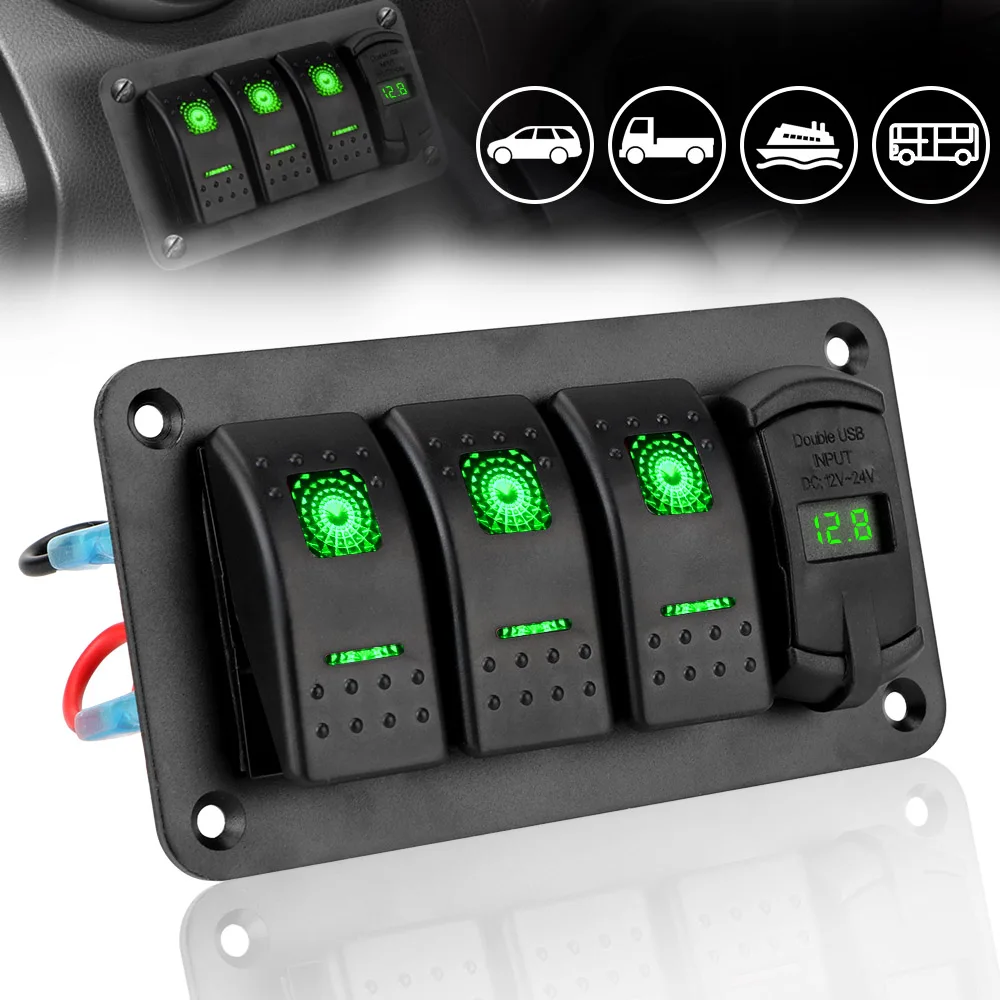
Modern yachts replace that entire panel with marine digital switching systems—often just called digital switching—on your MFD screen. Instead of a row of mystery switches, you see a simple, interactive diagram of your boat. Want to turn on the forward deck light? Just tap the bow of the boat on the screen. Need to check if the water pump is running? Its icon will tell you instantly. This intuitive approach to digital switching for boats makes managing your vessel as easy as using an app on your phone.
The real magic happens when you combine these controls into “scenes.” With a single press of a button labeled “Depart,” the system can turn on your engines’ blowers, activate your navigation screens, and power up your instruments all at once. Tapping an “Evening” scene might dim the main lights, turn on soft accent lighting, and switch on the stereo. This is how to automate your boat’s systems in a way that truly serves you, clearing away the mental clutter and letting you focus on the joy of being on the water. This same power to manage multiple systems at once is what transforms stressful situations, like docking, into moments of calm confidence.

How Automation Turns Stressful Docking into a Confident Glide
Perhaps no moment in boating is more stressful than docking, especially with a crosswind or current. Juggling the wheel, throttles, and sightlines can feel like a high-stakes performance. Building on the principle of one-touch control, system automation tackles this head-on by bringing all the necessary tools into one clear, easy-to-use interface. It transforms a moment of anxiety into an exercise in precision.
The most game-changing tool for this is the 360-degree camera system. Think of the ‘bird’s-eye’ or ‘drone-like’ view you see in modern cars when parking. Multiple cameras around the yacht are stitched together to create a single, top-down image on your main screen. Instead of peering over the side and guessing your distance from the dock, you see a complete, real-time picture of your vessel and its surroundings, eliminating dangerous blind spots.
This all-seeing view is then combined with simplified controls. On the same screen, you can manage your thrusters—small propellers at the bow and stern that push the boat sideways. These smart boat control systems allow you to simply tap or drag an icon on the screen to nudge your vessel perfectly against the dock, all while watching the maneuver happen from that perfect overhead view. Paired with automated stabilizer systems for luxury yachts, motion can be reduced at low speeds and even at anchor, further easing tight maneuvers and enhancing comfort.
The result isn’t a boat that docks itself; it’s a captain who is fully empowered and less stressed. These integrated bridge systems , once a luxury reserved for superyachts, make complex maneuvers feel intuitive and controlled. This same sense of security extends from the moment you arrive at the dock to the moment you drop anchor for the night.
Anchor with Confidence: How Your Yacht Can Watch Itself
Dropping anchor in a secluded bay is the dream, but for many, it comes with a nagging worry: what if the anchor drags while you’re asleep? Modern automation turns this anxiety into assured tranquility with a smart Anchor Drag Alarm. When you drop anchor, you simply mark the position on your boat’s main screen. The system then takes over, standing guard so you don’t have to. This is anchor system automation for yachts in action.
The magic behind this security is a concept called geofencing. Instead of just alarming if you move outside a simple circle, these systems create a smart, virtual boundary around your yacht’s expected swing radius. Think of it as drawing an invisible fence on the water that accounts for the natural way your boat will move with the wind and tide. If your vessel ever drifts outside this safe zone, the alarm is triggered, eliminating the false alarms common with older, less sophisticated GPS alerts.
True peace of mind, however, comes from how the system alerts you. A loud alarm will sound at the helm, but it also sends an instant notification straight to your smartphone, whether you’re asleep in your cabin or ashore having dinner. This simple but critical feature is a core part of modern yacht remote monitoring and control . These marine IoT devices ensure your vessel is actively watching over itself, and this ability to check in remotely isn’t just for anchoring. In many setups, anchor controls integrate with windlass status and other marine hydraulic system automation so you always know exactly what’s happening at the bow.
Peace of Mind From Anywhere: Checking Your Boat From Your Couch
That ability to receive an anchor alarm on your phone is just the beginning. The technology that makes it possible, a concept called Marine IoT (Internet of Things), is like giving your boat its own connection to the outside world. Just as your smart home thermostat can tell you the temperature when you’re away, these marine IoT devices allow your yacht to report its own health directly to you, no matter where you are. This transforms your relationship with your boat from one of occasional worry to one of constant, quiet confidence.
Imagine you’re a hundred miles away and a storm rolls through your home marina. Instead of wondering if everything is okay, you can simply glance at your phone. Has the shore power connection been lost? Is a bilge pump running more than it should, suggesting a leak? Are the batteries holding their charge? You can also see freshwater and fuel levels via a boat tank monitoring system, and manage marine smart energy features like shore-power failover and battery optimization. For trailerable boats, pairing a boat trailer tire pressure monitoring system extends that same safety mindset ashore. This system of yacht remote monitoring and control stands guard over your vessel’s most critical life-support systems, providing a virtual watchkeeper that never sleeps.
This functionality is a powerful answer to whether automated yacht systems are worth it. They turn a potential catastrophe—like arriving at the dock to find dead batteries or, worse, water in the bilge—into a simple, actionable notification on your phone. This peace of mind is invaluable, but automation isn’t just about preventing problems. It’s also about creating the perfect experience when you’re on board.
Crafting the Perfect Vibe with Automated Lighting and Climate Control
That perfect experience often begins with setting the right mood. If you’ve ever used smart home devices to create a “Movie Night” feel, you’re already familiar with the core concept of automated lighting on a yacht. Instead of fumbling with a bank of identical switches, you can activate pre-set “scenes” with one touch. For example, tapping “Sunset Cruise” might bring up warm deck lights and soften interior lights, creating an instant ambiance that matches the view.

These scenes go far beyond just lighting. A truly integrated system also ties in your audio and video. That “Dinner Party” scene could simultaneously brighten the salon and start a low-volume dinner playlist. A “Welcome Aboard” button could illuminate a safe path from the swim platform to the salon while your favorite music greets guests. This is where smart boat control systems transform from a simple convenience into a form of elegant hospitality, managed effortlessly from a single screen.
Perhaps the most welcome feature is one you’ll feel before you even step aboard. The same system allows for remote climate control. On a sweltering summer day, you can use your phone to start the air conditioning an hour before you arrive, ensuring the cabin is a cool oasis the moment you open the door. This seamless coordination between lights, entertainment, and climate is possible because all these components are linked to a central ‘nervous system’—the digital backbone that makes your boat truly smart.
The “Nervous System” of Your Boat: How It All Connects
That “central nervous system” has an official name: NMEA 2000 . While the name sounds technical, the idea behind it is refreshingly simple. Think of it as the USB network for your boat. Just as you can plug a keyboard, mouse, and printer from different manufacturers into your computer and they all just work, NMEA 2000 allows marine electronics from various brands to connect and communicate over a single, universal cable.
This standardized network is the magic behind true NMEA 2000 integration. It breaks down the walls between brands, meaning your engine data can appear on your navigation screen right next to information from your wind sensor. This level of cross-communication is foundational to a smart yacht: it’s a vessel where all the individual parts can work together as a single, intelligent whole, giving you a complete picture of your boat’s status in one place.
Ultimately, this seamless connectivity is what makes sophisticated, single-screen control possible. It’s the backbone for everything from a simple helm display to the stunning integrated bridge systems for superyachts. With this underlying network handling all the silent communication, the crucial choice becomes the ‘brain’ of the operation—the command center you’ll use to interact with it all.
Choosing Your Command Center: Crestron, Savant, or Marine-Native?
With all your boat’s systems ready to talk to each other, the big decision becomes choosing the main ‘brain’ you’ll use to control it all. Your choice for a command center generally comes down to two distinct approaches, each born from a different world but both aiming to deliver one-touch simplicity.
The first approach brings the world of luxury home automation onto your vessel. Systems from specialists like Crestron and Savant are masters of creating an incredible onboard atmosphere. Their strength lies in flawlessly managing everything that makes a yacht feel like a five-star resort: lighting scenes, climate control, motorized shades, and sophisticated audio-visual entertainment. If your top priority is setting the perfect mood—transforming the salon into a movie theater or the aft deck into a vibrant party space—the conversation about Crestron vs Savant for marine automation begins here.
In contrast, the other approach is born directly from the helm. Marine-native systems, developed by navigation giants like Garmin, Raymarine, and Navico, prioritize core vessel functions. Think of these as the ultimate evolution of the ship’s command center, designed to make boating itself easier and safer. Their primary goal is to deeply integrate engine data, autopilot, radar, and safety alerts onto one screen with absolute reliability. For owners who value operational awareness and tight control over navigation, this is the natural fit.
The best smart boat control systems aren’t one-size-fits-all; they depend entirely on your priorities. Is your main goal to perfect the onboard ambiance and entertainment, or is it to have the most integrated control while underway? Answering that will point you in the right direction.
The Big Question: What Does Yacht Automation Cost?
The cost of automating a yacht is less like a fixed price tag and more like building a custom home—it scales directly with your ambition and the size of the vessel. It’s best to think of the investment as a spectrum, influenced by a few key variables that determine the project’s complexity and scope.
The final yacht automation system cost is shaped by four key factors: the boat’s size (larger yachts require more hardware and wiring), the number of integrated systems (controlling lights and audio is simpler than adding engines and navigation), the level of customization (pre-set packages versus a fully bespoke design), and the age of the boat (a new build is a blank canvas, while retrofitting an older yacht requires more labor). As the integrated marine automation system market matures, capabilities continue to expand while many components become more standardized and accessible.
With those factors in mind, costs generally fall into three tiers. A Basic system might focus on a single area, like creating smart lighting and audio control, much like adding a Sonos system to a house. An Integrated system is the next step, where different components work together in pre-set “scenes”—like a “Docking Mode” that brings up cameras and thruster controls on one screen. Finally, a Bespoke system is the pinnacle, offering complete, custom-tailored control over every aspect of the vessel, often built on a platform like Crestron.
For most owners, automation is more than an expense; it’s an investment in safety, peace of mind, and effortless enjoyment. The ability to anchor with confidence, manage complex tasks with a single tap, and even monitor your yacht from home adds tangible value that is reflected both in your time on the water and the boat’s eventual resale price.
Can Automation Really Improve Yacht Fuel Efficiency?
The answer is a definitive yes, and the method is simpler than you might think. By connecting your engines to your main display screen, an automated system reveals your real-time fuel consumption. This process, often using a network called NMEA 2000 integration, acts like a data bridge for your boat. It translates complex engine information into a simple “gallons per hour” or “miles per gallon” number right next to your speed, removing the guesswork completely.
This live data is the key to improving yacht fuel efficiency with technology. You can now see precisely how small adjustments to your throttle affect your fuel burn, allowing you to find your boat’s unique cruising “sweet spot”—the point where you achieve the best possible mileage. It’s often not the slowest speed, but a specific RPM where the engines and hull are working in perfect, efficient harmony.
The difference can be staggering. For example, you might discover that pulling back from 2400 RPM to 2250 RPM only reduces your speed by one knot but cuts your fuel burn by 20%. Over a summer of cruising, these data-driven adjustments can easily save hundreds, or even thousands, of dollars. This turns the system into a smart investment, helping to offset the initial yacht automation system cost while making every journey more sustainable.
Your First Step Toward a Smarter Boating Experience
The world of automated yacht systems is built on a simple goal: to reduce stress and give you back what matters most—your time enjoying the water. This technology’s true value is measured in the moments it returns to you.
It’s the peace of mind from an anchor alarm that lets you sleep soundly, the confidence of stress-free docking in a breeze, and the simple elegance of setting the perfect evening mood with a single tap. The best smart yacht technology doesn’t add complexity; it makes the vessel feel like an intuitive extension of your will.
To see how you can automate your boat’s systems for yourself, take one simple next step: visit the websites of major brands like Garmin or Raymarine. Exploring their interactive demos is a fantastic guide, turning these concepts into a tangible vision for your future on the water. If you’re near Newport Beach, CA, look for a certified marine automation system Newport Beach CA provider to get hands-on advice and installation support.

You May Also Like
